

Education Programs
Examples of education programs (2010 - 2015) designed and implemented by Sebastienne Mundeim/White Box Theatre. Documentation of more recent programming to come.
Barnes Foundation: Navajo Textiles
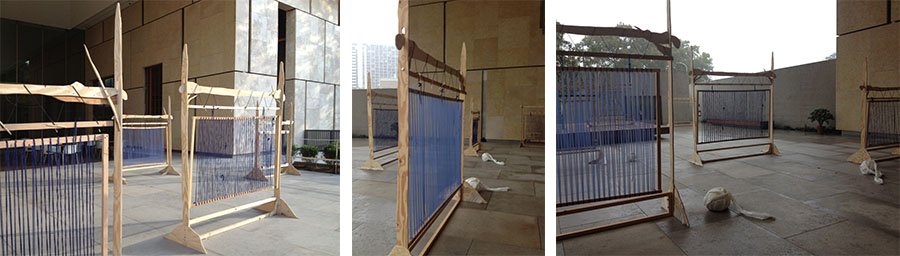
In 2011, The Barnes Foundation commissioned White Box Theatre to create an on-going education program that would introduce the Barnes Foundation and its collection, feature the Navajo Textile collection and engage 8th grade students from Philadelphia schools. The program serves approximately 1000 students a year. White Box continues to provide artist-educators and consulting for program development. The program offers entry points for discovery, from looking, to weaving, to integrating observation, questions, and links to personal experience.
White Box Theatre worked in conjunction with the archivists, art historians and educators at the Barnes. Research included learning the core value and underlying principles of Barnes’ philosophy of education — reading correspondence between Barnes and the Hubbell Trading Post, learning about the history, technology, and culture of the Navajo people and their weaving practice, and meeting with 8th grade teachers to learn about needs of students and schools. White Box Theatre developed a curriculum guide, core ideas for lesson plans for a pre and post museum visit experience, and a two hour in-museum experience.
The museum experience includes looking exercises in the galleries, storytelling with props, and two hands-on experiences with weaving – one on large tapestry looms modeled after the Navajo loom, and one on small cardboard handlooms.
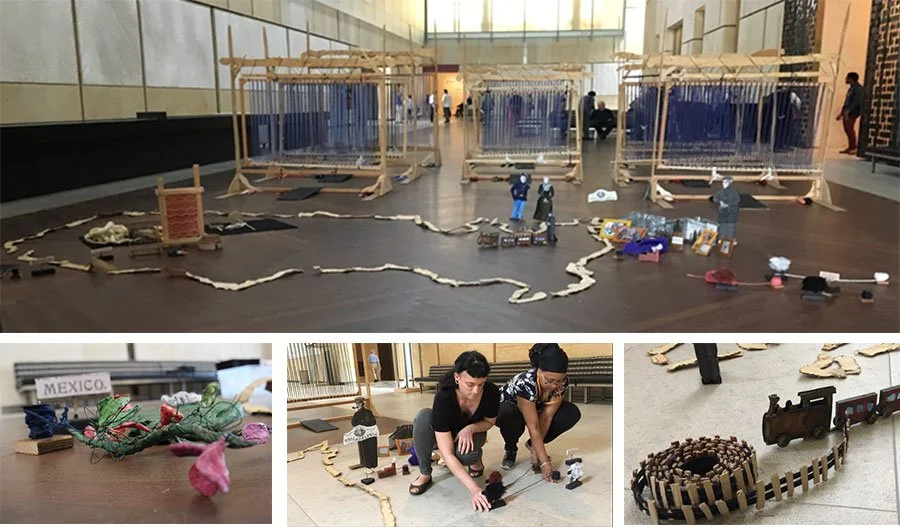
In the first year of the program, White Box Theatre applied for funding from the Pew Foundation to expand the programmatic content and workshop a performance with dancers and the large looms. The performance was developed in part to push the idea of cultural appropriation, and invite students to discover their own entry points of curiosity and understand the inevitable role of interpretation. We asked: as non-Navajo people how do we experience myth, technology, artifact, and the surface experience of culture understanding?
Dancers worked with the Spider Woman myth, techniques in weaving, and the ways in which railroad expansion and trade began shift practice and weave cultures together. Dancers moved through the courtyard while Mundheim shared pieces of history and asked questions about artists/learners think about interpretation. Students then participated in weaving experiences interactive exercises in the courtyard — this was exciting — 100 students moving together across the courtyard, integrating body, material, and awareness of each other. This was a one-time special experiment.

In 2015, White Box Theatre consulted with Natural Light Films and traveled to the Navajo Nation to make a short documentary film introducing students to the Navajo landscape, weavers, and textile. View the full video here.
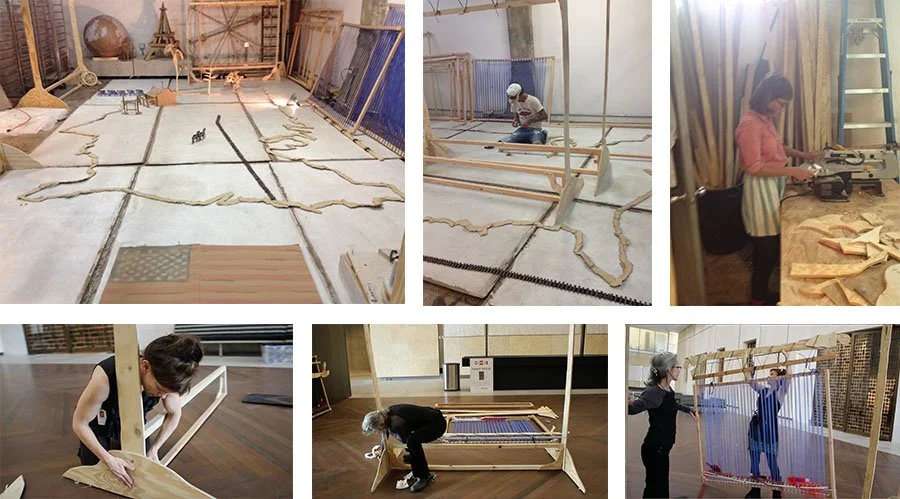
In 2014, PAPAYA engaged White Box Theatre to collaborate on the visioning of the organization and create interdisciplinary engagement and educational experiences. Through conversations with touring artists, content experts, local educators, and artists, White Box Theatre designed and led immersive, post-show experiences called the “LAB,” trained new and seasoned teaching artists for LAB program delivery, created curriculum for teachers and families, and created, hosted and facilitated salon sessions, and special events.
PA Performance Arts for Young Audiences (PAPAYA), presents internationally touring performances, produces new performances, and creates immersive engagement experiences for youth and adults. PAPAYA has presented programming at the Annenberg Center and the Painted Bride Performing Arts Center.
-
Developing engagement programming begins with researching the story content and artists process of making through watching video, studying content/context of the work, and speaking at length with the touring artists ahead of time. White Box then looks for local organizations that work with similar content as possible partners for program delivery. Content themes and methods of storytelling are distilled and groups of local teaching artists are formed to make up the LAB Animators (artist-educators that bring both immersive environment and workshop ideas to life). Together we watch video, discuss research, weave in the goals of partner organizations. Then creating an interactive experience in the spaces in and around the theatre to deepen the exploration of content, expand the world of theatrical, inventive experience, and inviting participants to be together in a longer shared experience. Sometimes these pre-program development sessions are also held for teachers and/or core stakeholders to deepen the theater experience and create community.
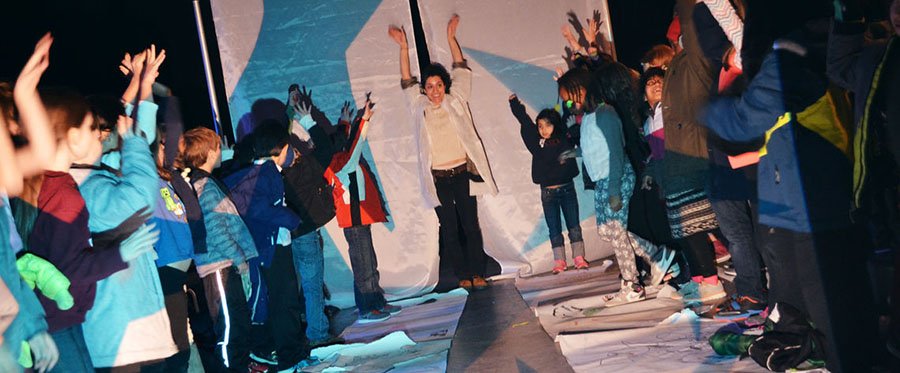
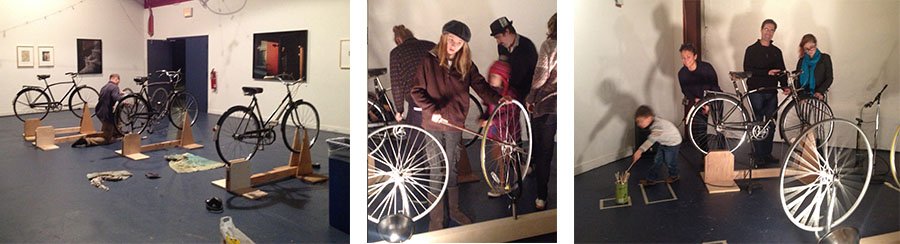
The immersive environments vary. In a performance where shadow play was central to the storytelling, White Box might created an interactive space with ready-made shadow puppets, light sources, and materials for creating new puppets. LAB Animators and touring artist worked with small groups of youth and adults to respond to questions about the performance through movement and play in a shadow world. In the cabaret show about the history of women and the bicycle, White Box Theatre built a playground of musical bicycles amplified with contact microphones. Participants were encourage to write short lyrics and find rhythm and sound by bowing a spoke or percussing a seat. For a spoken word performance, students were given prompts for writing and a DJ improvised with them as they spilled onto the stage to share voices and visions.
Lesson plans for teachers and families offer context for the performance, review the theatre experience, offer arts-based interactive activities and specific and open-ended questions.
PA Performing Arts for Young Audiences

Performances for which White Box Theatre created programming:
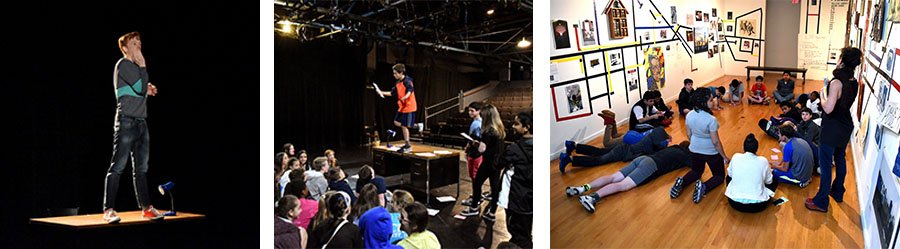
Titus, 2016
Titus is a funny solo performance from Scotland. The story focuses on the challenges of a 10 year-old boy confronting the loss of his mother, his father’s depression, and his reliance on his friendship with a girl named Tina. Performed while teetering on the edge, the performance celebrates the power of storytelling and imagination. White Box Theatre developed workshops and curriculum for adults and youth focused on writing and performing monologue.
The End of Everything Ever, 2016
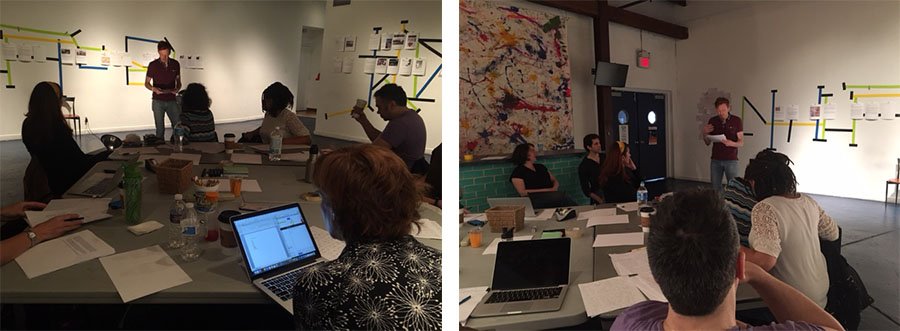
White Box Theatre prepared curriculum, design and artist-training for the LAB, and salon experiences in response to New International Encounters (NIE) performance The End of Everything Ever. In preparation White Box consulted with the Jewish Museum and the Anti-Defamation League. P NIE is comprised of artists from the Czech Republic, UK, and Norway, this show has been performed throughout Europe and on Broadway. Inspired by true stories of the Kindertransport, the UK’s rescue of Jewish children from Germany before WWII. This story follows the life of a 6 year girl, Agate, who’s German-Jewish family decides to send her on a train alone to the United Kingdom to an adoptive family, in hopes of having one family member survive. Programming included performance and writing exercises and interaction with the international performers.

Miss Ophelia, 2015
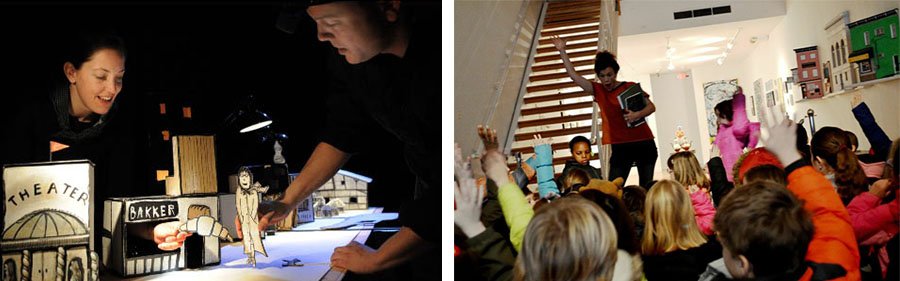
White Box Theatre created salon, curriculum, and LAB experiences using shadow puppetry, movement, and discussion in response to Netherlands’ Het Filiaal’s beautiful, funny, and profound performance based in the writing of children’s author, Michael Ende. Using object-theater, shadow puppetry, and comic acting, this story follows the arch of a shy girl born into a family who expects her to become an actress. Because she is shy, and in fact can only whisper she becomes a line-prompter hiding under the stage instead–over time she befriends shadows, confronts solitude and eventually her own mortality. Students painted the journey of Miss Ophelia, made puppets, experimented with shadow, and discussed the tender experience of her journey with shadows.
The Mayhem Poets, 2015
White Box Theatre created salon, curriculum, and LAB experiences for this US performance focusing on spoken work. For this event, The Lab generated over 1000 poems written and performed by youth and adults.
SPIN, 2015
White Box Theatre created salon discussion groups, curriculum for middle school teachers, and an immersive Lab experience in response to Canadian singer/songwriter Evalyn Parry’s dynamic, funny, multi-media cabaret performance about women’s rights and the evolution of bicycle. White Box Theatre worked with composer Bhob Rainey and six other local artists to create an immersive visual and interactive installation which invited song-writing and instrumentation on bicycles – spokes, seats and frames were rigged with contact microphones, historic facts and personal experience were integrated into song or poem-writing. This curriculum and installation-design are now touring internationally with Parry’s show. This work was geared towards children 10 and up.
Shadowtown, 2014
White Box Theatre created an environmental installation and education materials aimed at children aged 3 + and their families for the PAPAYA presentation of Australia’s Patch Theatre, Me and My Shadow, at the Annenberg Center as part of the 30 anniversary of the International Children’s Theater Festival. The installation encouraged experimentation with the art and science of light and shadow, in an exquisite installation throughout the Annenberg public spaces. The installation invited creation and performative participation for up to 250 children at a time.
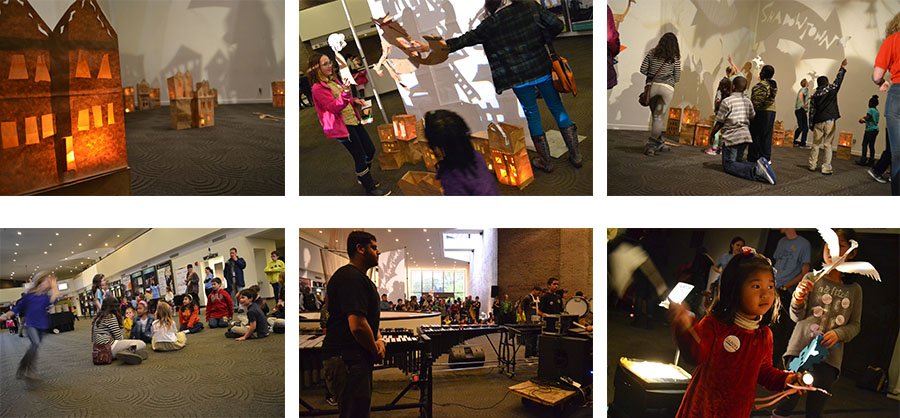
VIDEO EXCERPT FROM SHADOWTOWN: created by Jim Wiener
Arthur Ross Gallery: University of Pennsylvania
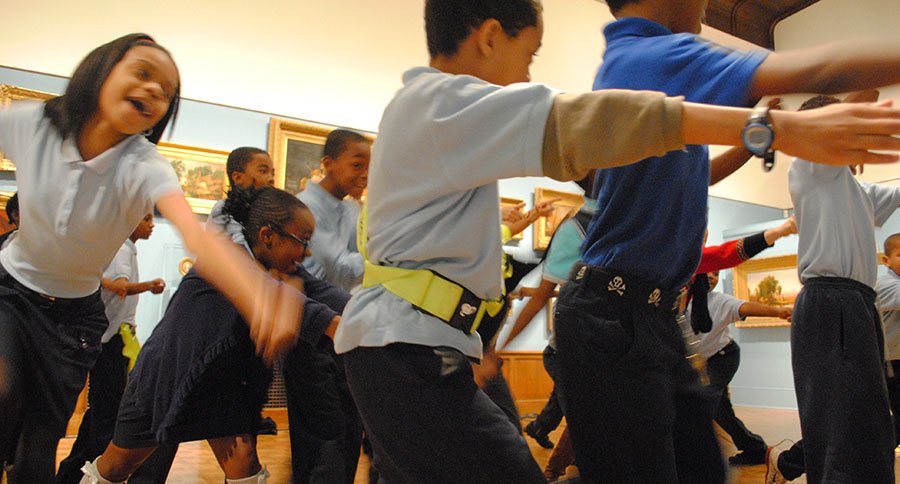
In 1994, the Gallery Director at the Arthur Ross Gallery asked Mundheim to create an interactive education program for the gallery in conjunction with its exhibition of Saul Steinberg. Mundheim remembered her own resistance to docent-led museum experiences as a child and tried to think about a more palatable approach to discovery and engagement. She created programming that began with research and distillation for her, and resulted in a program with flexible, open-ended questions, close looking, interdisciplinary storytelling, and hands-on activities. Over the course of 21 years, Mundheim refined her approach for each of these elements.

Program Content and Structure
A typical program begins outside of the gallery space. Students are asked what kind of preparation they have had for the visit and what assumptions they have. Next they are given an overview of what to expect within the two-hour experience, finally they introduced to basic rules of the gallery. Students are then invited into the gallery and given an opportunity to engage independently with the work in the room. They might be asked to think about something that is true about all the objects in the room. They might be asked to notice similarities in several works. They might be asked to think of one question related to a specific work of art. They are given 1-2 prompts to focus their looking at the exhibition in its entirety. The questions tend to be very open-ended so that we can notice what attracts the students, and we can give real space for their discovery.
-
Next students circle-up and discuss observations. Sebastienne and her teaching assistant have to be very knowledgeable about content in order to engage with the breadth of questions. The discussion begins with student observations and then moves into the thematics and history that comes together in a short presentation/performance using a lyrical script, props, and movement.
Presentations/performance might include: biographical portraiture of the artist or collector, elements of technique, specific vocabulary used in repetition to highlight themes and concepts. The presentation models imaginative interpretation to an arts experience and expands the context of the exhibition.
With new content, the students are asked to work in pairs or trios on a visual scavenger hunt. Some questions are very specific, many are complex or open-ended. Ambiguity and open-ended questions encourage students to talk to each other, interpret visual experiences, and come to conclusions after close-looking and conversations.
After the scavenger hunt, Mundheim and students gather to discuss student discoveries and questions. After a short discussion, 5-7 of the scavenger hunt discoveries are used to review the work again in a more focused way. Student observations and questions help shape the works choosen to look at again. Again, breadth of knowledge and reflection on the work are necessary for this in order to both make space for students’ thoughts and impulses, and also to weave in the themes in the presentation.
There is always at least one physical activity– a way in which to take a core concept and language from the exhibition and embody the concept and text. Focused physicalization is important for a focused mind and group organization. It also begins to introduce arts-based responses to exhibition and invites students to respond to work in another way.
Sometimes Mundheim has students lie on the floor, close their eyes and remember details of a work of art in their mind’s eye. This is also an important part of reflective practice – checking to see what is remembered, taking the time to reconstitute an experience in stillness.
Finally, there is always a hands-on project — often drawing from looking, another form of observing, reflecting, and embodying the work. Sometimes, if there is longer time in the gallery, another more technique specific project might happen – for example, collaging in the spirit of quilting, or stitching in the spirit of other textile work.
Finally, teachers are given a follow-up packet that includes history and description of the show, lesson plans to expand on the in-gallery experience, and discussion/essay questions for students to use back in the classroom.


Exhibitions
Sebastienne Mundheim/White Box Theatre created programming for at least one exhibition a year for 21 years. Exhibitions from 2009-2015 focused primarily on collections of American Art. From 1995-2008 the exhibitions were wide-ranging.
Examples exhibition content include: William H. Johnson: An American Modern, Creating: Quilts of the Lakota, California Impressionism: Masters of Light, In Material: Contemporary Fiber Artists, Dramatic Impressions: Japanese Theatre Prints from the Gilbert Luber Collection, An American Odyssey: The Warner Collection of American Art, West Philadelphia: Building a Community, Two Venetian Masters: Canaletto and Domenico Tiepolo Etchings from the Arthur Ross Foundation, Steve McCurry: South Southeast, and Sargent to Freud: Modern British Paintings and Drawings in the Beaverbrook Collection, Romare Bearden: An American Odyssey, Saul Steinberg: on Identity.
-
William H. Johnson: An American Modern, an exhibition from the Smithsonian Institution Traveling Exhibition Service (SITES) featured rare paintings by William H. Johnson, from the collection of the James E. Lewis Museum at Morgan State University. An essential figure in modern American art, William H. Johnson (1901-1970) was a virtuoso skilled in various media and techniques, and produced thousands of works over a career that spanned decades, continents and genres.
Creating: Quilts of the Lakota presented over twenty 20th and 21st century quilts from the Pine Ridge Heritage Center and Indian Reservation in South Dakota. Mary Bordeaux, a member of the Lakota tribe, curated this exhibition with the Arthur Ross Gallery. “Making items for family and the community is a large part of the Lakota’s way of life,” notes Bordeaux. In addition, 19th-century Lakota artifacts, such as moccasins, a cradleboard, and parfleche boxes, were lent by the Penn Museum to provide a context for Native sewing traditions prior to the introduction of quilting at Pine Ridge.
California Impressionism: Masters of Light presented thirty paintings that reveal the California coastline and reflect a time when railroad expansion and the gold rush changed the American landscape.
In Material: Contemporary Fiber Artists featured four innovated fiber artists. Japanese-born artist Lucy Arai apprenticed in the practice of sashiko, a decorative stitching process which she re-invigorates and applies to handmade paper and mixed media. Sonya Clark who uses thread, plastic combs, human hair, and other found objects to create wall hangings inspired by her African and American ancestry. Philadelphia-based Mi-Kyoung Lee has had her woven backdrops incorporated in theater productions around the globe. Cynthia Schira digitally connects art and language in her elaborately patterned Jacquard cloths, drawing inspiration from ciphers, musical notes, and geometric patterns.
Dramatic Impressions: Japanese Theatre Prints from the Gilbert Luber Collection explored the dynamic relationship of the Japanese woodblock print to traditional kabuki theater during the 19th and 20th centuries. By focusing on representations of theater and actors early modern printmakers developed many visual forms re-creating the effects of staging, pose, makeup and costume in a print medium. The prints illustrate images of actors performing as men and women, villains and heroes, losers and lovers.
An American Odyssey: The Warner Collection of American Art an exhibition from Tuscaloosa, Alabama featured paintings from three centuries of American art drawn from the personal collection of Jonathan “Jack” Warner and his wife Susan Austin Warner and the collection of The Warner Foundation. The paintings chronicle the American experience from 1799 to 1971 in portraiture, historical, genre, still life and landscape.
West Philadelphia: Building a Community included watercolors by self-taught Scottish immigrant, David J. Kennedy. Kennedy’s watercolors, drawn from the collection of the Historical Society of Pennsylvania, depict West Philadelphia houses, institutions, and streets between 1836-1898. City land maps, early photographs, and postcards also reveal the neighborhood’s rapid expansion and growth.
Two Venetian Masters: Canaletto and Domenico Tiepolo Etchings from the Arthur Ross Foundation presented etchings by Canaletto (Antonio Canal, 1697-1768) and Giovanni Domenico Tiepolo (1727-1804), two of the great Italian artists who made Venice an artistic capital during the eighteenth century. Canaletto was famous throughout Europe for his remarkable view paintings (known as vedute) that captured Venice’s most famous landmarks and the city’s unique atmosphere, created by the interplay of light and water. Domenico Tiepolo, son of the great history painter Giovanni Battista Tiepolo (1696-1770) was a renowned printmaker, painter, and draftsman who managed to work in support of his father’s work while forging his own artistic identity. This series, published in 1774, showcases Tiepolo’s attention to pose, costume and physiognomy as well as his wide-ranging use of etching techniques. The exhibition also features examples of Tiepolo’s etchings of religious subjects invented by himself and his father.
Steve McCurry: South Southeast presented a photographic journal by Magnum photographer Steve McCurry covering the region from Afghanistan through Pakistan, India, Sri Lanka and Bangladesh to Burma, Thailand and Cambodia.
Sargent to Freud: Modern British Paintings and Drawings in the Beaverbrook Collection organized by Curator Ian Lumsden from the collection assembled by Canadian press magnate, the first Baron Beaverbrook, who was a long-time resident of England and patron of British art. The exhibit is an assemblage of modern British paintings and drawings acquired by Lord Beaverbrook toward the end of his life, for his last philanthropic endeavor, the building of The Beaverbrook Art Gallery.

Additional Education Programs

White Box Theatre has been in residence in conjunction with touring performances. We create interdisciplinary arts workshops that are both tailored to the interests and needs of commissioning organizations and respond to either concepts or techniques in the touring work.
Creative Alliance and Maryland School for the Deaf Baltimore, Maryland
At the Creative Alliance in Baltimore and at the Maryland School for the Deaf, (MSD) we spent 6-weeks working with in-school and after-school groups as part of our Sea of Birds tour, 2010. Sea of Birds was presented at the Baltimore Theatre Project as part of the Quest Arts Festival. The Creative Alliance and MSD, partnered with the festival and Baltimore Theatre Project in particular, to offer us a residency to engage kids. We used our residency time to further explore puppet construction and movement invention. Through these workshops we created fantastical kinetic creatures, integrating movement and writing, culminating in a performance for the general public.
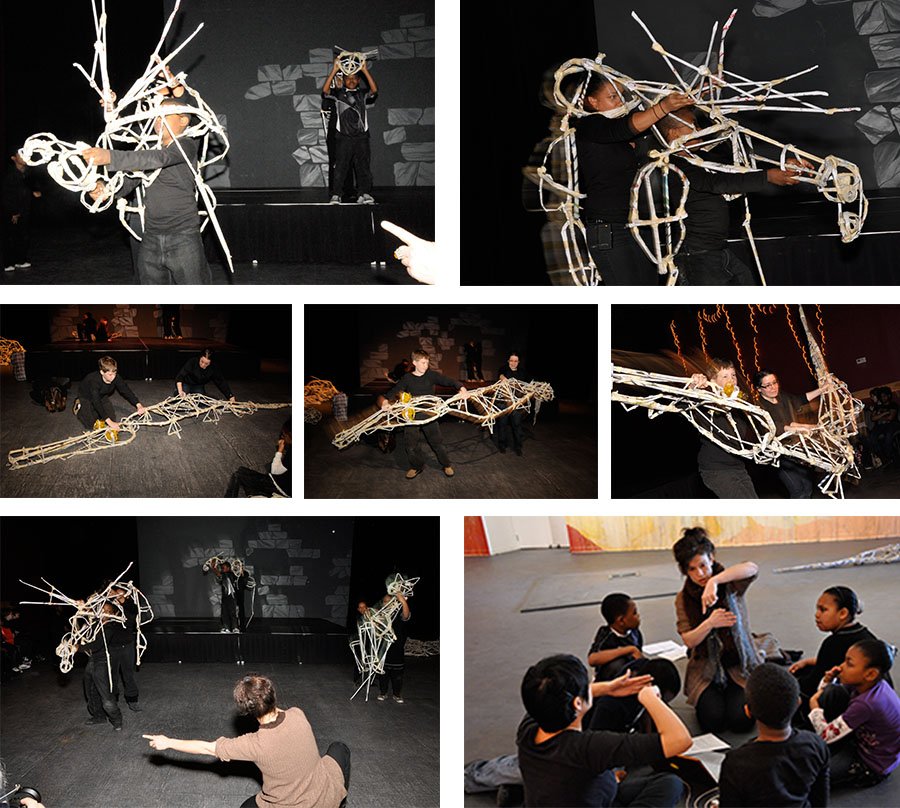
Videos of Performance
